

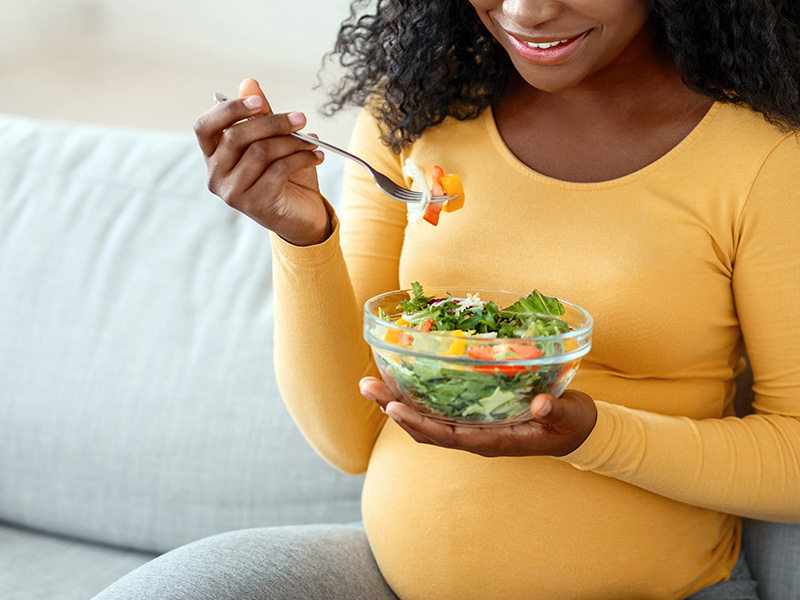
Food cravings are extremely common during pregnancy, especially for sugary, high calorie, and highly processed foods. Studies show that 50-90% of pregnant women experience these types of cravings.
These cravings, combined with the widespread availability of fast food and convenience meals, can contribute to unhealthy dietary patterns. Research indicates that high consumption of ultra-processed or junk foods during pregnancy is associated with excessive weight gain, gestational diabetes, and increased body fat in newborns, highlighting the potential long-term health risks for both mother and child.
The good news is that we can reverse this trend by developing healthy new habits by shopping for, cooking, and sharing great-tasting meals at home with family and friends.
Below are some key notes from each food group to help guide your choices when deciding what foods to eat or purchase:
Breads
- Choose bread that is 100% whole grain.
- If sodium is a concern, No Salt Added breads are available, but at a more expensive price.
Cereal
- Cold cereal is tricky because many brands appear healthier than they are. The key is to read labels. Look for options with at least 10% the Daily Value for fiber and less than 7 g of sugar.
- Avoid granola or any cereal with the word “crunch” in it – these options are very high in calories and sugar.
| Choose | Avoid |
| Bran Flakes | Raisin Bran |
| Kashi GoLean | Kashi GoLean Crunch |
| Cheerios | Honey Nut Cheerios |
Soup
- Always compare labels and choose a soup with less than 480 mg sodium per serving and remember that one can usually contain two servings.
- Soups are frequently on sale. Check your grocery store for deals.
- The following brands are good options:
- Campbell’s Healthy Request
- Campbell’s 98% Fat Free Soups
- Campbell’s 98% Fat Free Condensed Soups
- Progresso Reduced Sodium Soups
- Healthy Choice Soups
Snacks
- Limit unhealthy items such as fried foods, chips, cookies, cakes, ice cream, candy, and soft drinks.
Meat, Poultry, Fish, Beans and Nuts
- Choose:
- 93% lean ground turkey.
- Fresh fish or frozen fish filets with no added salt.
- Boneless, skinless chicken breast.
- Fresh beef and pork loin or round “loins” and “rounds” are usually leaner cuts. Trim visible fat before cooking.
- Dried beans, peas, lentil, and tofu are vegetable sources of protein and are inexpensive.
- Nuts, nut butters, and seeds are good sources of protein and healthy fat.
- Bake, broil, or grill your meats instead of frying them.
- Limit:
- Ground beef. Even lean ground beef is high in fat and saturated fat. Lean ground beef tends to be more expensive than lean ground turkey.
- Breaded, dressed, stuffed, fried, or seasoned fish.
- Skin-on chicken (legs, thighs, drumsticks). These cuts are less expensive, so if choosing these, remove the skin before preparation.
- Cuts with lots of visible fat or “marbling”, ribs. Also avoid pre-marinated or seasoned meats that may be high in sodium and/or fat.
- Canned beans are high in sodium. If using caned items, rinse before consuming.
- Avoid:
- Raw or undercooked meat, fish, or poultry
- Heat hot dogs and deli meats until they are steaming hot to kill harmful germs
- Limit certain types of fish, which may be high in mercury:
- Do not eat any shark, swordfish, king mackerel, or tile fish.
- Limit albacore (white) tuna to 6 oz per week.
- Limit locally caught fish to 6 oz per week if you are unsure about its mercury content.
- Limit low-mercury fish and shellfish like shrimp, canned light tuna, salmon, pollock, and catfish to 12 oz per week.
Processed Meats
Avoid processed meats including deli meats, bacon, sausages, and hot dogs. Even “lower sodium” brands exceed the Health Healthy limit of 480 mg sodium per serving. If sodium is not a concern, the following are lower fat options to enjoy on occasion.
- Deli Meats: turkey breast, chicken breast, roast beef. Avoid salami, pepperoni, and other sausages, and deli bologna
- Bacon: center cut bacon is lower in calories and fat is more expensive than both regular bacon and turkey bacon
- Sausage: frozen turkey patties and links are better options but always compare labels before you buy. Vegetarian sausage can also be an alternative.
Added Fats
Butter & Margarine Spreads
- Read labels to find something around 50 calories and 5g of fat/tablespoon with 0g trans-fat for your household.
- Examples
- Smart Balance Light
- Brummel & Brown Spead with Yogurt
- I Can’t Believe It’s Not Butter Light
Oils
- Use oils sparingly. When using oil, choose one lower in saturated fat, trans fat and cholesterol like canola oil, corn oil or olive oil.
- Use a nonstick spray when cooking.
- Chose reduced-fat, low-fat, light, or fat-free dressing for salad, dips, or marinades to limit calories.
Dairy
- Choose yogurt with no added sugars. Yogurt is less expensive in larger containers. Add your own fruit to cut back on calories and sugar.
- Eggs are a good and inexpensive source of protein. Egg whites and egg substitutes are lower in fat, saturated fat, and cholesterol.
- Cook until the yolk is no longer runny
- Cheese is high in sodium, especially if you have more than one slice. Cheese is also generally high in fat and saturated fat. If you must have cheese limit for serving to 1 slice or ounce.
- Avoid:
- Raw or unpasteurized milk, or other products made with unpasteurized milk.
- Soft-serve yogurt
- Soft cheese, like brie
- Blue or Gorgonzola cheese
Fruits
- Choose fruit that is in season to get the best price.
- Fruit offered in bulk, like apples and oranges, are usually priced inexpensively.
- If buying frozen fruit, look for no sugar added options.
- If buying canned fruit, choose no sugar added or fruit packed in its own juice (instead of syrup) which you can rinse away to limit extra sugar.
Vegetables
- Choose a variety of colors.
- Fresh, frozen, and no salt added canned vegetables are all good options.
- If using canned vegetables, rinsing them under running water may wash away extra salt.
- Frozen vegetables are most affordable in large bags. They are more expensive in smaller portions, steamer bags, and with added sauces.
- No salt added canned vegetables are the same unit price as regular vegetables.
- Fresh vegetables are also inexpensive when the vegetables are in season.
- Avoid raw sprouts.
Beverages
- Keep your body well-hydrated by drinking 10-12 8-ounce cups of healthy beverages/day. Water, low-fat milk, and 100% fruit juice are all good choices.
- Whole fruits are healthier than juice.
- Limit caffeinated beverages to one 8-ounce serving/day.
- Some herbal teas can be harmful to your baby. If you like herbal tea, ask your doctor or dietitian which ones are safe.
- Avoid unpasteurized juices and cider.
Dealing with Nausea
It is common to feel sick to your stomach, especially during your first trimester. Here are some tips which may help:
- Eat small amounts of food often.
- Take your prenatal vitamin with a meal or snack.
- Try dry, starchy foods such as crackers, toast, and dry cereal.
- Sip ice-cold water.
- Avoid strong food smells.

Leave a Reply
You must be logged in to post a comment.