

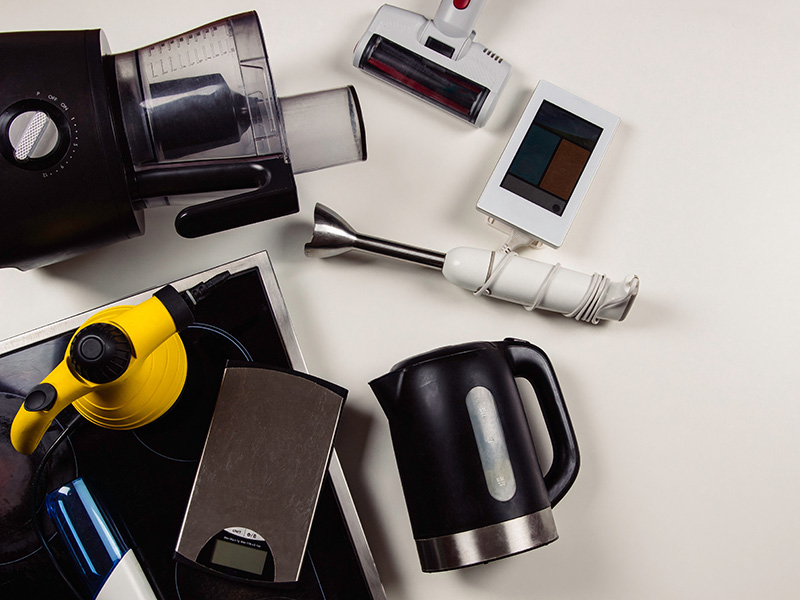
Choosing the right pots and pans for your kitchen does not have to be overwhelming or expensive. It should be a process that is enjoyed by adding to and inheriting tools which quickly become fond memories over time. Whether you choose one brand of cookware to outfit your entire kitchen, or you choose various brands, keep in mind what foods you wish to prepare with the utensil.
Basic Kitchen Needs
Pots and Pans
- 1 large stock pot
- 1 medium saucepan
- 1 small saucepan
- 2 frying pans
- 1 roasting pan
| Recommended | Alternative |
| Aluminum: PRO: Heats quickly and evenly, and is durable and inexpensive. Aluminum is the most common cookware sold and used in professional kitchens. Recommend: At least 1 large, 1 medium and 1 small sauce pot, CON: It can react with acidic food and leave a metallic after taste. This occurs usually only after long use and multiple deep scratches to the cooking surface. Non-stick: PRO: Good for reducing fat used in cooking, they are durable and easy to clean. Recommend: 1 medium (12 inch) sauté pan, and 1 (8 inch) sauté pan. CON: Always replace when nonstick coating splits and peels as it can easily be absorbed into your foods. Stainless steel: PRO: Will not corrode or react with acidic foods. Purchasing a stainless-steel pan with a carbon core produces rapid, evenly distributed heat. Recommend: Various size sauce pots, roasting pan and fry (sauté) pans. CON: Does not absorb heat well. | Glass: PRO: Holds heat well and is non-corrosive can be used on the stovetop and in the oven. CON: Heat conduction is not as uniform as with metal and they may crack or break. Cast Iron: PRO: Good for frying and searing because it retains heat well. Maintains the heat at a uniform temperature even on high heat. When using this pan, a little iron from the pan is added to the food, which can be good for those seeking to add iron to their diet. CON: It does react with acidic food and can leave a metallic after taste. Needs to be dried thoroughly after each use to prevent rusting. |
Kitchen Equipment
When you are ready to stock your kitchen, here are a few suggested items to help you create nutritious meals that will serve you well for years to come!
- Cutting board: Non-porous plastic (clean carefully with hot soapy water and sanitize solution)
- Chef’s knife 8” or 10”: Sturdy handle and wide blade to comfortably hold in your hand. Used for dicing and chopping
- Paring knife: Small, handheld knife for cutting and peeling
- Slicer: Long thin blade knife used to slice and carve roasts
- Serrated knife: Used to cut breads and crusts
- Vegetable peeler: A must!
- Pepper mill: it is essential to use freshly ground pepper over store bought ground pepper. The difference in flavor will be noticed by all
- Thermometer: Eliminate guesswork when preparing poultry, pork or other foods where cooking temperatures are critical
- Sauté pans: Nonstick 8 or 10-inch pan good for making omelets, quick sauté and uses very little oil
- Wooden spoon: Perfect for non-stick pans and starchy foods, etc.-my favorite!
- Measuring cups and spoons: Having a set of dry and wet measuring cups ensures more accuracy in baking. Measuring spoons are available ranging from 1/8 teaspoon to 1 tablespoon.
- Wire Wisk: Use for whipping eggs and batters
- Slotted Spoon: Use for draining items cooked in liquid
- Colander/Strainer: Use for draining items cooked in water
- Ladle: Deep spoon used for serving soups, stews and gravy
- Baking sheet pans: Use to bake cookies, biscuits, etc. available in nonstick and aluminum.
- Muffin pan: Available in nonstick, ceramic, aluminum, and fun shaped pans for creating breakfast treats
- Multi-speed electric blender: Great for puréeing soups, sauces and smoothies
- Electric hand mixer: Use to mix cake batter and whip potatoes, etc.
Slice or dice, use the right tool to make it nice!

Leave a Reply
You must be logged in to post a comment.