
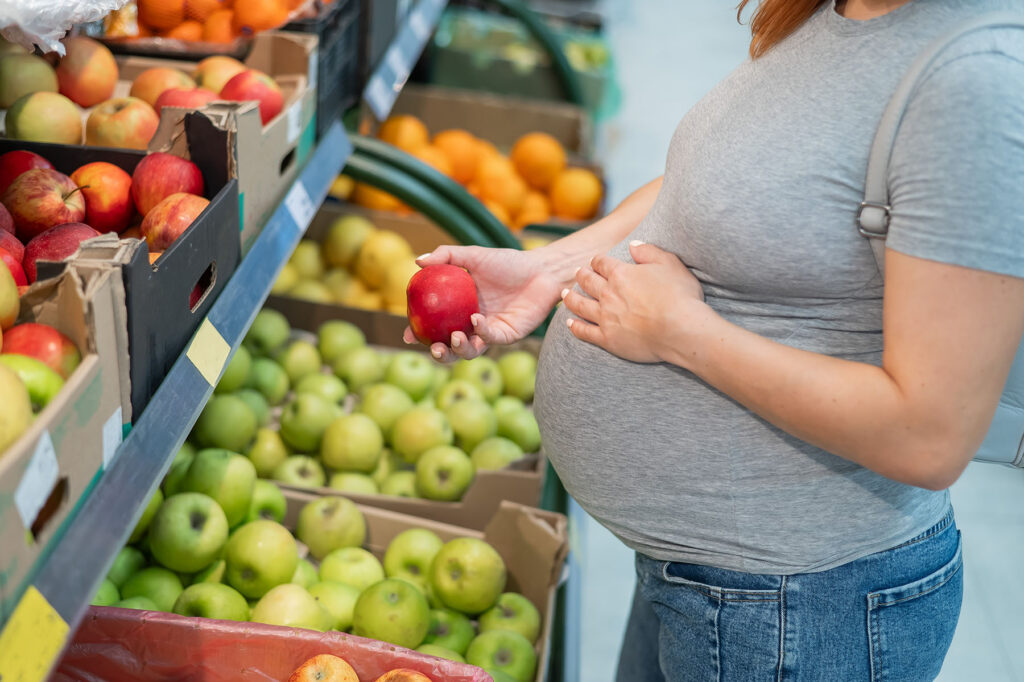
Achieving balance and building a healthier eating pattern can be simple and stress-free. A good place to start practicing your healthy lifestyle is at the grocery store. Selecting nutrient-rich foods and beverages is a way to make better choices within your daily eating plan. You will find that grocery shopping does not have to be a chore, and choosing nutrient-rich foods may be more familiar and easier to find than you originally thought.
Meal planning and grocery shopping is most effective when you:
- Plan: Your grocery shopping process should begin before you get to the grocery store. Plan your prenatal meals for the following week as best as you can.
- Always go with a list: Now that you have a menu for the following week, make a list of what you’ll need to make these healthy meals and take it on your shopping trip. This way, what you are going to get at the grocery store has already been decided – your trip to the grocery store is simply executing the plan you’ve already decided on.
- Shop the Perimeter: Most less healthy foods are located in the center of the grocery store. Stick to the perimeter where the fresh produce, dairy, meat, and fish are usually located.
- Pile your cart with Fresh, wholesome foods: Choose mostly “real” food that doesn’t contain a whole lot of artificial ingredients, sugar, and salt. Choose a rainbow of fruits and vegetables (Tip: look for produce that is in season for better tasting, less expensive options), whole grains, lean proteins, low-fat dairy, and beans/legumes.
- Steer Clear of Highly Processed Foods: Avoid foods with high amount of sugar or high fructose corn syrup, as well as sugar-sweetened beverages. Other foods to avoid include hydrogenated fats, foods containing refined or enriched grains, over processed/packaged foods with large amounts of sodium.
Seasonal Fresh Produce
A healthy and balanced diet should include foods that are both flavorful and nutritious. Making thoughtful choices about the foods you buy, the ingredients you use for flavor, and the portions you eat can help you build a healthy and energetic lifestyle. Food’s main purpose is to fuel our bodies by providing energy, vitamins, and minerals. Choosing nutritious foods can lead to meals that not only taste great but can also help prevent illness, support a healthy pregnancy, and help expectant mothers feel their best.
- When shopping for produce, think about what season you are in and where you live.
- Produce is more flavorful, abundant, and less expensive when it is purchased in season.
- Buy from local farm stands and markets: these foods are usually allowed to ripen longer in the field, gaining their optimum flavor.
- Vegetables supply nearly all the nutrients required for good health.
- Whole grain products also contain a wealth of vital nutrients including vitamins. Many whole grains such as quinoa, barley, and amaranth contain an abundance of protein and iron.
When grocery shopping, refocus your meal planning:
- Visit the produce section first. Select items that are in season and build your meals around them.
- Use high quality lean animal proteins to complement your meals rather than as the basis of a dish.
- The USDA recommends 2 ½ – 3 cups of vegetables daily for pregnant women.
- Select whole-grain products instead of processed foods whenever possible. You’ll quickly notice their rich flavor and satisfying texture. Most people find that these foods are more filling, provide lasting energy, and are not loaded with empty calories.
Rule of Thumb:
- When in season, produce should be in great abundance and more flavorful and affordable than when out of season.
- Enjoy the season’s best produce. Choose local and seasonal ingredients whenever possible, and use them generously in creative, flavorful recipes.
- Fresh produce should taste great! Do not settle for poor quality and flavor.
- Use fresh produce and the nutritional value it presents as the centerpiece and building block of your meals.
Click here to view an article on produce and its benefits.
Produce Food Safety
- Choose fresh, undamaged produce and keep it separate from raw meat always.
- Refrigerate perishable fruits and vegetables (≤40°F).
- Rinse under running water (no soap), scrub firm produce, and wash before peeling or cutting.
- Be cautious with sprouts: Raw sprouts are high-risk for bacteria.
Final Thoughts
Healthy prenatal eating begins with smart choices at the grocery store. By planning ahead, focusing on nutrient-rich foods, choosing fresh seasonal produce, and practicing proper food safety, you can create meals that support both your health and your baby’s development. Remember that small, consistent changes can make a big difference throughout your pregnancy journey. Building healthy shopping and eating habits now can help you feel your best, meet your nutritional needs, and establish lifelong habits that benefit your growing family.
For additional prenatal nutrition resources, healthy recipes, and meal planning ideas, speak with your healthcare provider or registered dietitian. Every healthy choice is a step toward a healthier pregnancy and a healthier future for you and your baby.

Leave a Reply
You must be logged in to post a comment.